Showing posts with label Lord of the Rings. Show all posts

Wednesday, March 10, 2021

I Was Asked: Literary Cannon

Welcome everyone!

I don't often think about the so-called "Literary Cannon." It's a useful reference for sure and no doubt fun to debate. However, it's not anything that would really occupy my mindspace despite the fact I deal with literature on a daily basis.

Anyway, I was asked on two different occasions today what books were being added to the Great Books/Literary Cannon. I can only assume there was some kind of debate online about it, so I answered the curious minds as best I could.


I said that I am no expert on it and absolutely have no say on the matter. Therefore, my opinion is not particularly valid. Pressed, I told each inquirer that my observations tell me that books written in the 1960's were currently entering the cannon.

I pointed out that novels and stories from the 50's such as The Lord of the Flies, The Lord of the Rings, Fahrenheit 451, Atlas Shrugged, Cat on a Hot Tin Roof, The Old Man and the Sea, and Things Fall Apart are widely regarded as great classics. In fact, some are even cliché at this point.

One of my interrogators wanted to know which books specifically from the 1960's I felt were being added. I shrugged and said if I were forced to give my own guess I would say:

  • To Kill a Mockingbird by Harper Lee
  • A Clockwork Orange by Anthony Burgess
  • One Hundred Years of Solitude by Gabriel Garcia Marquez
  • The Feminine Mystique by Betty Friedan
  • The Bell Jar by Sylvia Plath
  • Charlie and the Chocolate Factory by Roald Dahl
  • Slaughterhouse 5 by Kurt Vonnegut
  • I Know Why the Caged Bird Sings by Maya Angelou
And if you're wondering, yes I knew all of those off the top of my head - which is what I am speaking from even now as I write this post. Again, I'm no expert, and I have no say in the matter.

Anyway, I was also asked why newer books aren't being added. I had to answer that new books, while immensely popular, have not yet had a chance to stand the test of time. It is only the stories that are truly useful to humanity that are remembered and beloved.

Some suppose that the Great Books are only considered great by luck or chance: they grabbed the zeitgeist as just the right time and are remembered for that. I pointed out that at one point Twilight had captured the zeitgeist but is now more memed than read, in my experience. Perhaps that's a personal bias, but regardless, just because something rockets to popularity doesn't ensure status as a classic work of literature. 

The Road, The Kite Runner, Never Let Me Go, etc. are all amazing works of literature, but they can't be judged if they are timeless yet since not enough time has passed to tell. There's no need to rush it. Besides, perhaps in a decade or two we'll look back on this era of literature and find a hidden gem no one is talking about right now, and THAT book will become the defining work of literature (fiction or nonfiction) of our time.

Finally, I assured both of the people who asked me this, that the cannon isn't really all that important when it comes to deciding what books are important to them. It's just one heuristic for categorizing literature and one that can be predisposed to snobbery and rigidity. 

If any of my readers wondered what my position is, well now you know it. Like I mentioned, I suspect there's some controversy brewing on some social media platform, and I may have inadvertently stepped in it. I don't mean to. Don't want to. I just found it odd I was asked the same question on two occasions on the same day, and I thought I would share that with you.

Peace,

-Troy
Wednesday, January 13, 2021

2021 Public Domain Celebration!

Welcome everyone!

In 2019 I made a post about the Public Domain. I plan to update that each year as new works enter it. For those who don't know, the Public Domain is a system by which copyrighted works (such as songs, novels, screenplays, paintings, photographs, etc.) lose their exclusivity. That means, anyone can use those works in any way they see fit without paying the original creator.

The rules about Public Domain are strange. Congress and big business have interfered with them numerous times. In fact, the works that become owned by the public this year should have been Public Domain back in 2001! Thank Disney for the 20 year delay, if you like. You can read more about it on Duke's School of Law page dedicated to the Public Domain.

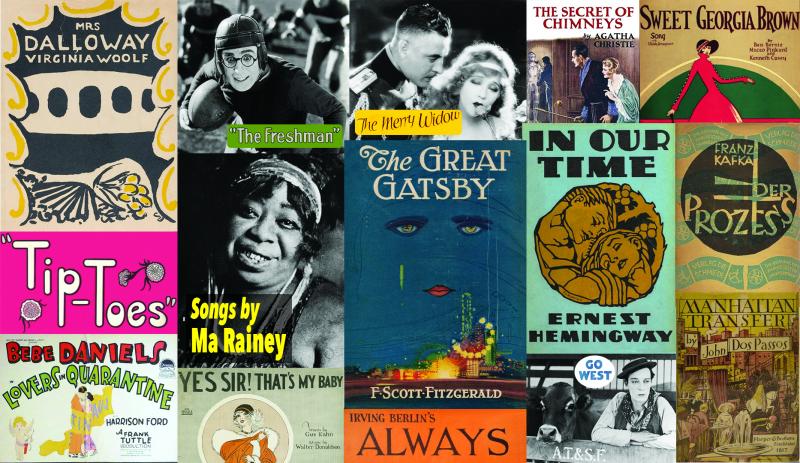
Anyway, the big deal is that this year some significant works enter the Public Domain. Namely, they are The Great Gatsby by F. Scot Fitzgerald, Mrs. Dalloway by Virginia Woolf, and In Our Time by Ernest Hemmingway.


So that means you are free to write your Adventures of Nick Carraway novel you always wanted or the tennis career of Jordan Baker or even the steamy midnight trysts of Gatsby and Daisy. 

Public Domain isn't limited to just print works. You can now make songs, art, and film of public works without paying any royalties. However, it still must be all original work. For instance, any images or changes to the novel made in the 2013 film still belong to Warner Brothers. So be careful on that.

Other upcoming important works that will enter the public domain in the near future include Mickey Mouse and Steamboat Willey in 2024, Little House on the Prairie in 2028, Superman in 2033, The Chronicles of Narnia in 2034, and The Hobbit/Lord of the Rings in 2044. 

So start writing now, and be ready when those dates roll around!

Peace,

-Troy

Monday, January 27, 2020

Motifs I'd Like to Use #10: Signposting - A Literary Technique

Welcome everyone!

Today I'm going to talk about "signposting." If you've read many book series, then you probably know that that is even though you've likely never heard it called that.

Signposting is when an author leaves the reader a clue about what time of year it is by observing some kind of recurring momentous occasion. This can be anything from holidays, birthdays, seasons, to celebrations.

For instance, many of you have probably read or or watched the Harry Potter series. In most of the books, Harry has to get to school. The start of the school year is a signpost that tells the audience how much time has passed since the last installment. She also usually includes something about Christmas. That's another signpost that lets the reader know how much time has passed within the story.

In The Lord of the Rings, Frodo and Bilbo share the same birthday. Those days are observed in the story to let the reader have an idea of how much time has passed.

Signposting is an important technique because the reader will often have a hard time keep track of days, weeks, and years during a story. Just think about how hard it is to keep track of stuff in real life! And also, it's kinda lame for an author to just come out and say "It was two years since the events of the last book..."

My books will also use signposting. Tristan's birthday is a big one. Also the change from summer to fall and from fall to winter will be used. However, there may be times I just have to come out and say, "Two weeks later..."

Each author has to make that decision. Signposting is preferred to plainly stating it, but it's not always a feasible technique. Plus, it's a fun way to celebrate tradition. People love traditions, and revisiting a holiday or celebration will bring back fond memories for the reader, which is always nice. You can even subvert those fond memories by having tragedy strike at a time that is normally associated with happiness.


Anyway, there's a little peak behind the curtain of writing for you. Don't forget to come back on Thursday for a HUGE reveal. It's going to be wonderfully exciting for you. I can't wait!

Peace,

-Troy